Thursday, November 5, 2009

{Holiday Entertaining} Hot Chocolate Bar

Picture 1
Candy buffets and sweets stations are really popular now days, but why not spice it up for the holidays with a "Build Your Own Hot Chocolate Bar."  Your guests will be sure to enjoy this wonderful heart-warming treat!

Hot Cocoa Bar How-To’s

  • Use fancy mugs. This can be an fun, attractive way to tie in your colors.
  • Have a few assortments of flavored hot cocoa. Some favorites that would also act as a perfect base for your guests’ creations would be peppermint, white chocolate, and dark chocolate.  Make sure the liquid starts out HOT.  The room temperature add-ins will cool the cocoa quickly.
  • Finely chop your chunky add-ins so they will melt well.
  • Have both liquid and dry options for add-ins.

Hot Cocoa Bar Add-Ins

  • Marshmallows (what hot cocoa isn’t complete without this staple?)
  • Peppermint sticks
  • Flavored syrups
  • Flavored whipped cream
  • Cinnamon sticks
  • Orange twists or rinds
  • Chopped up candy bar
  • Chocolate chips
  • Chocolate truffles
  • Caramel squares
  • Candied ginger
If hot cocoa isn’t your style, but you’re still looking for that exclusive, unique touch you may want to opt for a caramel apple bar or even a s’mores bar.  Both have the same idea as the hot cocoa bar - You start with the base and add toppings or mix-ins to personalize. The options are limitless.  Whatever your preference, a creative food bar can be a great tool to give your reception that extra “it” factor you’ve been looking for.


Thank you for this wonderful information - blog.thebrideandgroom.com 

Wednesday, November 4, 2009

{Holiday Entertaining} Thanksgiving Place Cards

Picture 12

Delightful Place Cards

Tip your hat to the occasion by making these delightful personalized place cards from miniature flowerpots

You can also make a large version of this Pilgrim hat for a complementary centerpiece.
What You Need:
  • 3-inch terra-cotta flowerpots
  • Acrylic paints in black, white, red, and blue
  • Paintbrush
  • Crafting foam in black, yellow, green, and purple
  • Scissors
  • Thick white crafts glue
  • Black fabric paint pen
Instructions:
1. Decorate the pots. Paint each pot black and allow it to dry. Choose a color to paint the band around the top of each pot. Let it dry. Make white dots on the rest of each pot by dipping the handle end of a paintbrush in white paint and dotting onto the surface.
2. Add brims. Trace a circle from black foam about 1/2 inch wider all around than the pot opening, using an appropriate size dish, cup, or lid. Cut out.
3. Make the buckles. For each pot, measure the width of the band (the portion painted a different color). Cut a rectangle from foam that measures about 1/8 inch deeper than the band. Cut out a smaller rectangle from the center. Glue the buckle to the band. Let the glue dry.
4. Personalize for each guest. Use a black paint pen to write a name on each colored band. Allow the paint to dry before using.
Article found on BHG.com

Tuesday, November 3, 2009

{Holiday Entertaining} Tantalizing Baked Brie Recipe


Cranberry-Apricot Baked Brie with Honey

Picture 3
This recipe has been tested by Country Living

Straight from your grocer's freezer, the dough baked around a cranberry, apricot, and almond topped Brie rises to the occasion — no flour, food processor, or kneading required.
Ingredients


1/3 cup(s)
chopped dried cranberries
1/3 cup(s)
chopped dried apricots
1/4 cup(s)
sliced almonds
1/4 cup(s)
honey
1 1/2 teaspoon(s)
chopped fresh thyme
1/4 teaspoon(s)
salt, divided
1/8 teaspoon(s)
freshly ground pepper
1
sheet frozen puff pastry, thawed
1 wheel(s)
(8-ounce) Brie
1
egg white

Directions: 
Preheat oven to 400°F. Combine cranberries, apricots, almonds, honey, thyme, 1/8 teaspoon salt, and pepper in a medium bowl. Set aside.

Roll puff pastry to 12-inch square. Trim top rind off Brie and center cheese on pastry. Top with fruit mixture.

Beat egg white and 1/8 teaspoon salt in a small bowl and brush some egg wash along pastry edges.

Gather dough up around Brie, twisting into a topknot. Chill in freezer for 15 minutes.

Brush pastry lightly with egg wash and place on a parchment-lined baking pan. Bake for 35 minutes.

Monday, October 26, 2009

{Pro in the Know} Addressing an Invitation

There are several ways to address your invitations, but it all depends on the degree of formality desired, who is being invited, how modern do you want your piece to be, and of course cost.   Your envelopes are the beginning of the first impression for your event, so its important to choose wisely on how you are presenting your gorgeous invitation pieces.

Below are several options on how to address your envelopes on your invitation.  To figure out the option that is best for you, take the number of invitations being mailed out and multiply it by 3 or 4.  That's how many steps each piece is going to take.
  1. Outer envelope main address
  2. Outer envelope return address
  3. Reply card return address
  4. Inner envelope name (if you choose to have one)
Handwritten Address - This is the most cost effective option, but can become very time consuming depending on how many envelopes you have to address.   If you give yourself a goal of 10 - 20 pieces per day or per person, your handwriting will stay beautiful on all of the pieces.  You can ask friends, your bridal party, or family to assist you.  Also try your writing pens out on paper before you use them to make sure they don't smudge or smear.  You don't want a messy envelope!
Picture 3
Calligraphy - For many years calligraphy has been considered one of the most popular ways  to address a wedding invitation.  This art form creates a beautiful elegance to your envelope and can save your schedule if you don't have time to hand write them yourself or don't have legible penmanship. When choosing a calligrapher that is right for you, make sure to ask for samples of their work.  Often times, a calligrapher will have several font styles to choose from and can match the style of your invitation.

Picture 2
{photo by AZPenGraphics.com}

Computerized Calligraphy - Computer calligraphy is a beautiful alternative to hand calligraphy for the cost conscious busy individual.  It offers sophistication and elegance, but can often times come at a fraction of the cost.  There are several beautiful calligraphy style fonts that you can give your printer to use when they are printing your envelopes for you.  Or check with your stationer to see if they can do it for you and match the same font on your invitation.  Often times you may even be able to incorporate the invitation design and a flourish of your choice.

Envelope Wrap w/ Address - Envelope wraps are a new trendy way to incorporate the design of your stationery into the design of your envelope.  They start on the front of the envelope and wrap all the way around to the back with the return address printed directly on them.  It's definitely not standard etiquette to have them, but they sure make a wonderful first impression and carry a cohesive look for your design. You then either hand address, calligrapher or even use computerized calligraphy to do the main guest address on them.
Picture 1
Address Labels - Labels are a quick alternative to hand writing and computer calligraphy.  You can find them in all different colors - white, silver, gold, and even clear.  If you are going to use labels, try the clear ones so they don't look so odd against the background of the envelope.  Or try to incorporate a design into your label rather than just text.  This would be my least recommended way of addressing an envelope unless its the only way you can get them out in time.

Wednesday, October 21, 2009

{Pro in the Know} Invitation Terms


Everybody talks about wedding invitations, but there are actually many more terms that are associated with them and items that might accompany them.  Below are explanations of some of the more common terms and items that you are likely to encounter while shopping for your invitations. 
 Picture 4   

Seal and Send Invitations: This all-in-one wedding invitation style folds up and seals into its own self-mailing piece.  Attached to the invitation by a perforation is the response postcard which is easily removed by the guests.  Since the response piece is a postcard, you will save on postage for the return mailing and the envelope is eliminated.  Pricing for this type of invitation usually includes decorative seals along with a printed return address on both the back flap when initially mailing the invitation and on the response postcard.


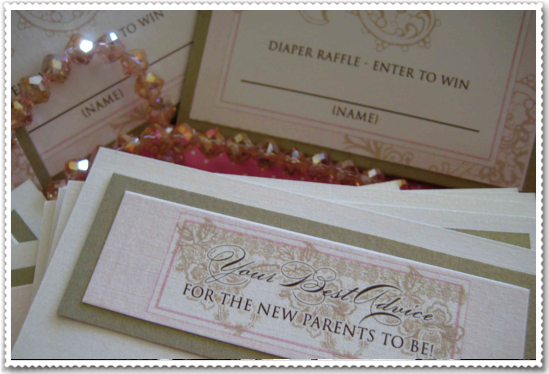
Layered Invitations:  This term pertains to invitations that have layers of paper tied or glued together.  Many times the top layer is translucent which means that through the top layer you will see a muted version of the decorative paper that lies underneath. 


Pocket Wedding Invitations: This style of invitation includes a pocket wrap that holds the invitation card and has a pocket to hold any separate card enclosures.  The wrap then folds up into one piece for enclosing in the mailing envelope.

Announcements:  For those whom you would like to inform of your recent marriage but will not be invited to your wedding, you can choose to mail them an announcement card.  They can be printed on paper that matches your wedding invitation with the verse reading that your wedding has already taken place.  Suggested mailing is on the day of your wedding or immediately after. 

Reception Cards:  An insert card that contains all the details of your wedding reception.  Reception cards can be used in place of having this information printed on your invitation or if only certain guests might be invited to this portion of your celebration.  They can be ordered to match your invitations and then be included as a separate insert.  Please keep in mind that including this card could possibly add to your mailing cost since postage is based on weight.

Response Cards:  Guests are asked to return this card indicating whether they will be able to attend your wedding.  Response cards provide you with the accurate guest count you will need to properly plan for your dinner/reception.  The response card along with its return mailing envelope will be inserted with your wedding invitation.  Remember to include a postage stamp on this small return envelope which will also have a mailing address pre-printed so your guests can easily return it by the date you have requested.   

Map/Direction Cards:  Guests will appreciate direction cards as a convenience if they are not familiar with the location of the church and/or reception.  

Double Envelopes:  Traditionally, formal wedding invitations come with a set of two envelopes.  The outer envelope is actually the mailing envelope containing the name and address of the guests.  The inner envelope holds the invitation along with any insert pieces and is addressed with only the guests' names.  This envelope is left unsealed and placed inside the outer envelope.

Printed Envelope Flaps:  Having your return address printed on the flap of the outside envelope can save you time and ensure that undeliverable wedding invitations are promptly returned to you.  A return address also provides an address to any guests who might not be able to attend but still wish to send a card or gift.  There is usually a small charge for this option. 

Lined Inner Envelopes:  For a small fee, you can request a colored lining on the inside of your inner envelopes to add a special touch to your wedding invitation ensemble.  Color choices will vary depending on the invitation style you choose.

Envelope Seals:  Optional, decorative self-adhesive seals can add the finishing touch to the outside of your mailing envelope.  They are available in many styles and are used to give the illusion that they are holding the flap down even though the envelope has already been sealed. 

Informal Notes:  These are typically used as your thank you notes but it is a good idea to order them when you order your wedding invitations since they can be printed on matching paper and this will save you on shipping costs.  Informal notes are personalized with either your monogram or first names on the front with the inside left blank for you to write your personal message.  Any extras can be used long after the wedding for other purposes.  Blank mailing envelopes are included.

Engraving:  This is a time-honored process of raising ink on paper through a process of etching metal plates, filling the etches with ink, then pressing paper into the plates.

Thermography:  A printing process whereby wedding invitations are printed in ink and a special powder is sprinkled over the wet ink. Then the invitation is sent through a heater which melts the powder and "raises" the ink. Thermography is more cost effective than engraving. 

Many of the above items are not essential to making your wedding invitations complete but now you know some of the options that are available.   Remember, this is your special day, so it’s your decision as to which invitation style you choose and which pieces or special touches to include as part of your entire stationery ensemble. 


Article by Knol


Search This Blog

Loading...

Followers

Blog Archive

  © The Event Essentials | Designers of Chic Wedding Invitations and Stylish Celebrations | Click Here ---> TheEventEssentials.com

Back to TOP